rED Melbourne reflections 2026
Left on rED

On a surprisingly pleasant Saturday morning in August 400 passionate educators chose to give up 50% of their weekend in favour of learning and connecting with their peers regardless of public, private or even the state in which you work.

The view from the level 9 presentation area was so calming for a city location which really added to the charm of this 10 level behemoth of a school.
I’ve already shared my reflections of my experiences presenting at researchED this year but I thought it was also important to reflect and share what I learned from the other five sessions I attended on the day.
Keynote - Anna Stokke:
Anna Stokke ensured to bridge the gap between continents and hemispheres with the bold mathematical statement that “math = maths”.
Despite only speaking for 25 minutes Anna Stokke managed to pack the time with many insights about why bad ideas gain traction in schools and how we can prevent that from happening in future.
Anna told the story of sailors in the 1800’s who kept dying of scurvy and the way a quasi-experiment was created with various conditions which discovered that sailors who ate citrus during their travels were able to remain healthy. Even with this discovery, somehow our first celebrity endorsement of a product took hold instead. Captain James Cook claimed that drinking malt wart would prevent scurvy and so then on ships, sailors were able to drink malt wart and continue to either get malnourished or be lucky enough to also be exposed to enough citrus to survive. Capt James Cook being the first influencer was not on my researchED bingo card1. 48 years later it was finally mandated that the actual preventative treatment of scurvy was required for all sailors.
If you’re following along and weren’t there on the day, hopefully you’ve made the connection that this isn’t too dissimilar to what we see in the education world with bad actors and products which cause harm sold to schools despite the evidence that explicit teaching works best being readily available since at least the 1980’s.
This led to the introduction of the ‘education innovation cycle’ where a new initiative is introduced, it spreads like wildfire as the new trendy or shiny thing and then it either fails or the novelty wears off. (I’m looking at you UDL)
I found it really helpful that Anna then explored the reasons why evidence-informed methods are not consistently applied and those reasons were:
Trust as staff have been sold a story countless times before.
Institutional resistance as staff have a sunk cost of all of the previous initiatives.
And what counts as evidence as “research shows” can mean anything (which was a running theme in the sessions I attended throughout the day)
These above points lead to educational ideas being marketed without standards because staff need to be sold an idea and all of the potential benefits of it regardless of the evidence behind it. This really highlights the importance of staff being literate in how to analyse research as not all research is generalisable and anecdotes ARE NOT evidence. Strategies or programs which are marketed as inclusive consistently do the opposite.
“Vague language is a cover for bad ideas” - Anna Stokke (my new favourite quote)
I really zoned out for the panel and left early to go and set up my presentation and then Session 2 was me. So this panel from The Simpsons really encompasses this section of the day.
Session 3: Rebecca Birch + Pen Peddie - Explicit Teaching and Wellbeing:
Before we launch into the content of this session it would be remiss of me not to mention Rebecca Birch winning style awards for the day with the coolest t-shirt possible of just the words “Sweller, Kirschner & Clark” in bold blue font on a white tee. If she sold these I am exactly the kind of nerd who would buy them.
I was really excited for this sessions as I have been banging the drum of explicit teaching and wellbeing being positively correlated for years, but having nothing other than anecdotal evidence to support my findings.
I was a little bit disappointed how much time this session spent explaining the theory and structures behind how explicit teaching can impact wellbeing but that was less about the quality of the information and more that I felt like I already knew and practiced exactly what they were saying. All I could think throughout the session was that my staff back at school need this exact presentation to confirm why explicit teaching is the way and how it can help to be the preventative tool to manage behaviour and lead to student success and therefore improvements in wellbeing.
They spoke to the fact that Australia has some of the highest rates of persistent low level behaviours and this is estimated to take up, up to 20% of teachers personal planning time. There is also a rising incidence of behavioural challenges from students AND parents which left me thinking about the number of ChatGPT lawyers seem to be cropping up in our student and parent interactions. I really feel like when parents refer to the U.N. Charter of Human Rights we should be able to ask checks for understanding in response.
Ben and Rebecca then made reference to self-determination theory where if students needs are met they are able to flourish as well as highlighting that students receive far less praise and acknowledgement in the later years of school. This made me think about the one time I brought a roll of stickers to a Year 12 class and gave one to students every time they got a whiteboard question right and the insane positive impact it had for something so silly because they were given a clear avenue to praise.
Session 4: Haili Hughes - Lethal Mutations:
I was so excited to see Haili Hughes as I have become a massive fan of her writing online and her willingness to say hard truths and actually take a stance because as Pamela Snow said in a response to one of her recent posts:
Speaking your mind and taking a stand does come at a cost and can be wearing at times, but the middle of the road is where we are most likely to be hit by traffic from both directions. - Pamela Snow
Haili presenting on lethal mutations was of particular interest as I often have fear that despite our best intentions some of the implementation in our school has become a worksheet from the 90s that has been photocopied so many times that it’s a poor imitation of the initial document. Too often in our implementation we focus more on the strategies rather than the principles and hope that the underlying purpose transfers via vibes and osmosis.
Classrooms are too complicated for research to ever tell teachers what to do - Dylan Wiliam
Evidence into action is so difficult because research says can mean anything.
“If you’re not using evidence, then you’re using prejudice” - Sir Kevan Collins
Evidence + Professional Expertise = Evidence Informed Practice.
I feel like often there’s one part of this equation that is letting the outcome down.
Haili then introduced us to the C.L.A.I.M.S. acronym as a tool for examining the credibility of research through an incredible fun game of showing us ridiculous studies and picking out the problematic element (although I will accept no criticism of the LEGO corporation).
C.L.A.I.M.S. stands for:
Conclusions - claims that match what was tested.
Limitations - highlights potential weaknesses of the study
Applicability - do the findings actually generalise to wider populations?
Independence - are their any conflicts in the study? Are there external stakeholders supporting it?
Methods - is the study design sound?
Samples - was the size and representation of the population appropriate
Haili then highlighted the difference between an edumyth and a lethal mutation with an edumyth being a widely held belief that is incorrect and a lethal mutation being where a strategy in practice has warped or morphed beyond intention.
“The problem is not change, but thoughtless change” - Viviane Robinson
We were then provided with the advice to build understanding, not compliance. Frontload the why, model expected mechanisms and give staff time to digest.
Session 4: Dr Nathaniel Swain - Explicit Instruction Done Right - Teach to the Students, not the slides:
By this point in the day after battling a virus all week and the adrenaline rush of presenting myself I needed some comfort food in the form of professional learning. As much as I should look for something new, I wanted to enjoy someone familiar. Some days I just want to watch golden age Simpsons episodes and that is exactly what Nathaniel Swain’s presentation was at researchED this year.
Nate managed an intense balancing act of humour, complex presentation tools and prop comedy to have the audience hanging on his every word and picking their jaws up off of the floor based on the PowerPoint hacks he gave away. In terms of sessions that were directly implementable, my mind was blown that I can embed my document camera in my slide decks automatically so I don’t need to swipe between windows in such a clunky way.
The core message was really clear, effective teachers need to know the content, know the students and know the learning science.
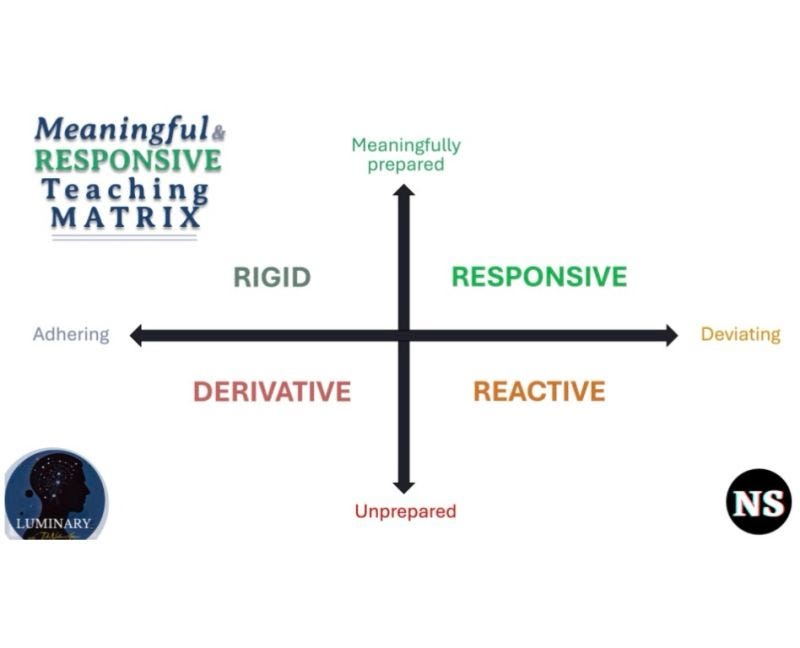
He presented this matrix for meaningful and responsive teaching which greatly upset the crowd solely for the fact that derivative does not start with an R aswell. My colleague Jade suggested very smartly that it should be Ridiculous in that corner.
This session really hinged on the idea that slides are just a tool to use in your instruction and that slides alone cannot make a great lesson and that there are many things you can do with slides that you just could not do otherwise. He proved beyond reasonable doubt that death by PowerPoint is solely in the hands of the presenter and that the deck itself should not be on trial. I appreciated the idea that deviation although frightening is actually a great thing. Deviation is where we are responsive and meet the needs of our students. It is low variance, not no variance.
I also now really want to by a telescopic pointing stick because it really was amazing for emphasis.
Session 5: Caiti Wade - First 5 Steps to School Improvement
At this point I was just here for vibes. Caiti is the best, she said many smart things. I’d already seen this session in Ballarat earlier in the year and so this time was just like watching Space Jam for the 100th time in my life for the nostalgia and trying (and failing) to take some nice photos for Caiti.
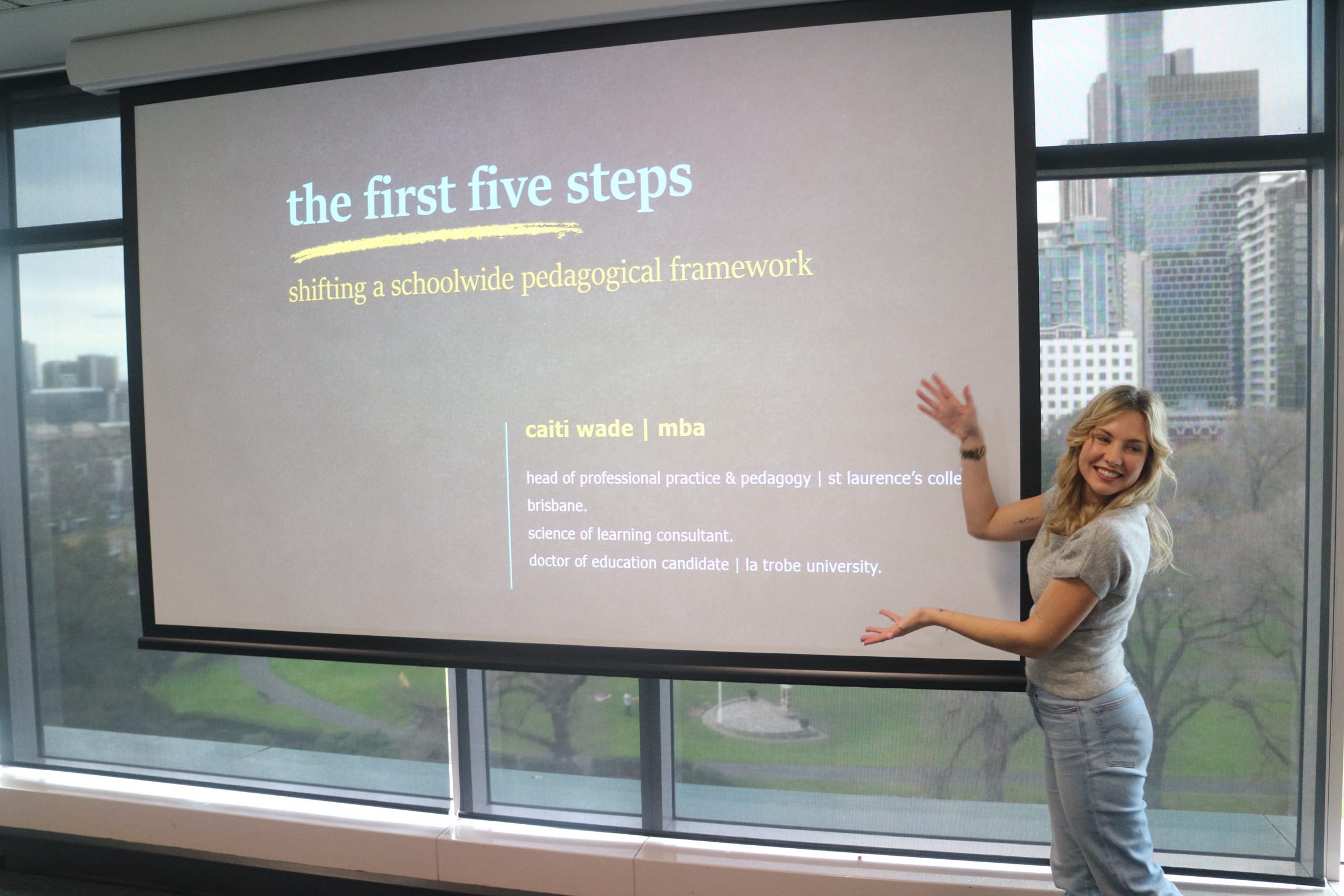
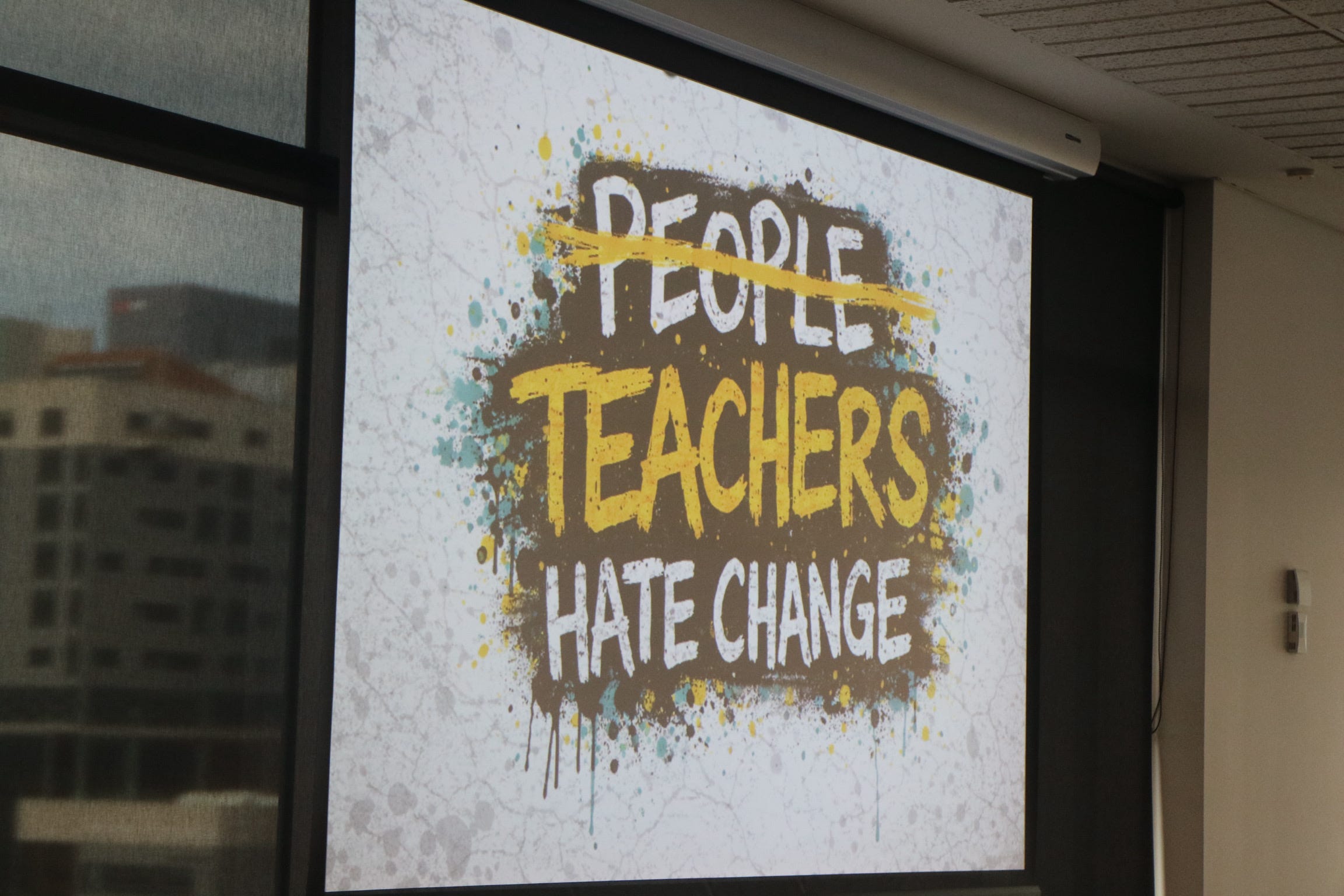
After all of this the networking drinks were absolutely incredible and so fun to talk school improvement with so many different people that came to my session or people I vaguely knew from the internet. Someone called me ‘brave’ for always willing to share my opinions honestly online. Then we went out for one of the nicest Italian dinners I’ve ever had with a group of amazing educators and people I cannot wait to see and work with again.
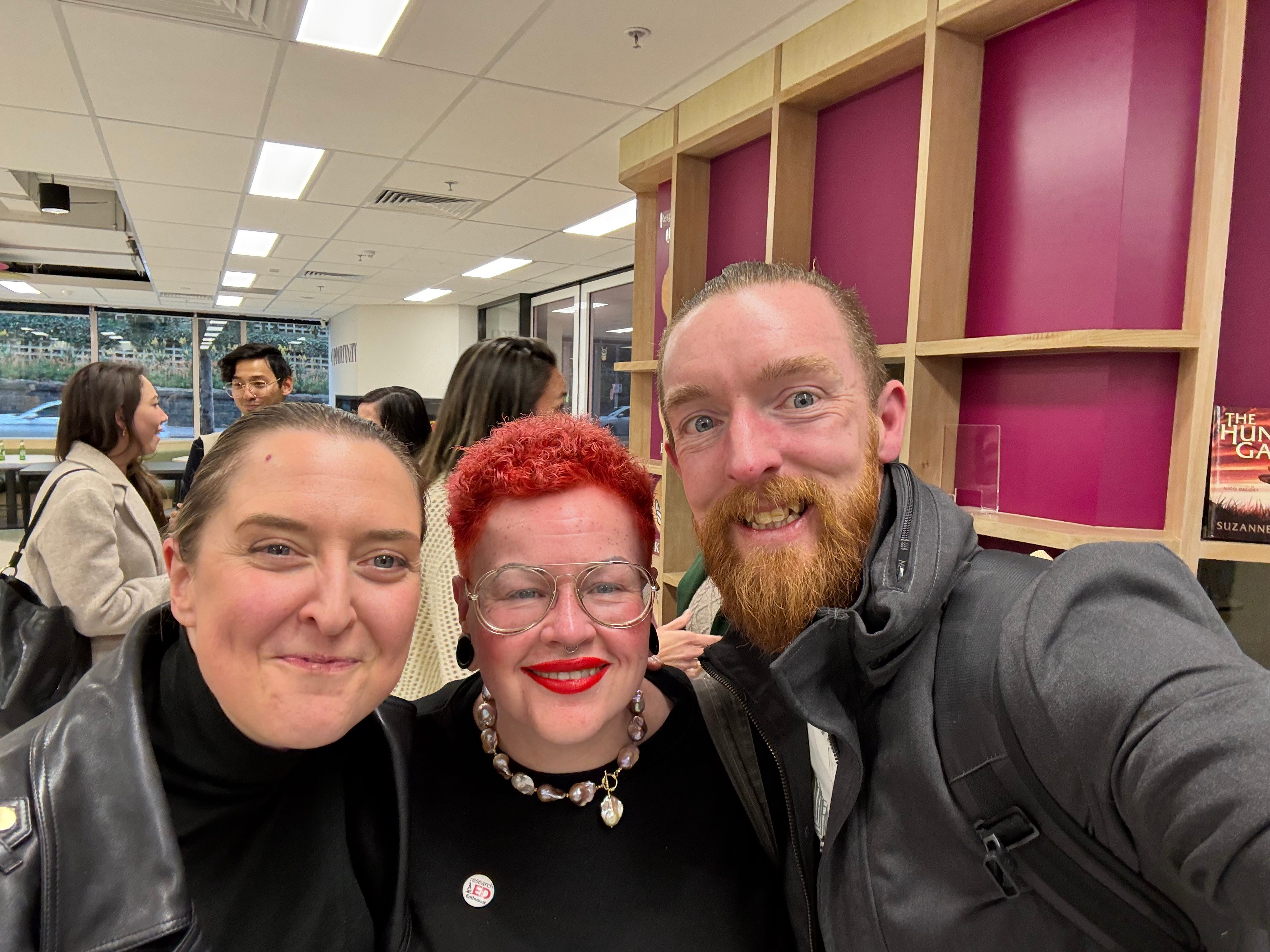
researchED rules. If you’ve never been make sure you go to the one closest to you at the next opportunity. Next up we have Canberra at the end of the month.
What was on my rED bingo card were all of our favourite edu quotes.