Strat Chat - Classroom Layouts
Getting into rows about rows.

If you asked me at the end of my initial teacher education if you should ever sit your students in rows I would’ve responded with such an emphatic no with the fervour like you’d just asked if we should bring back slavery.
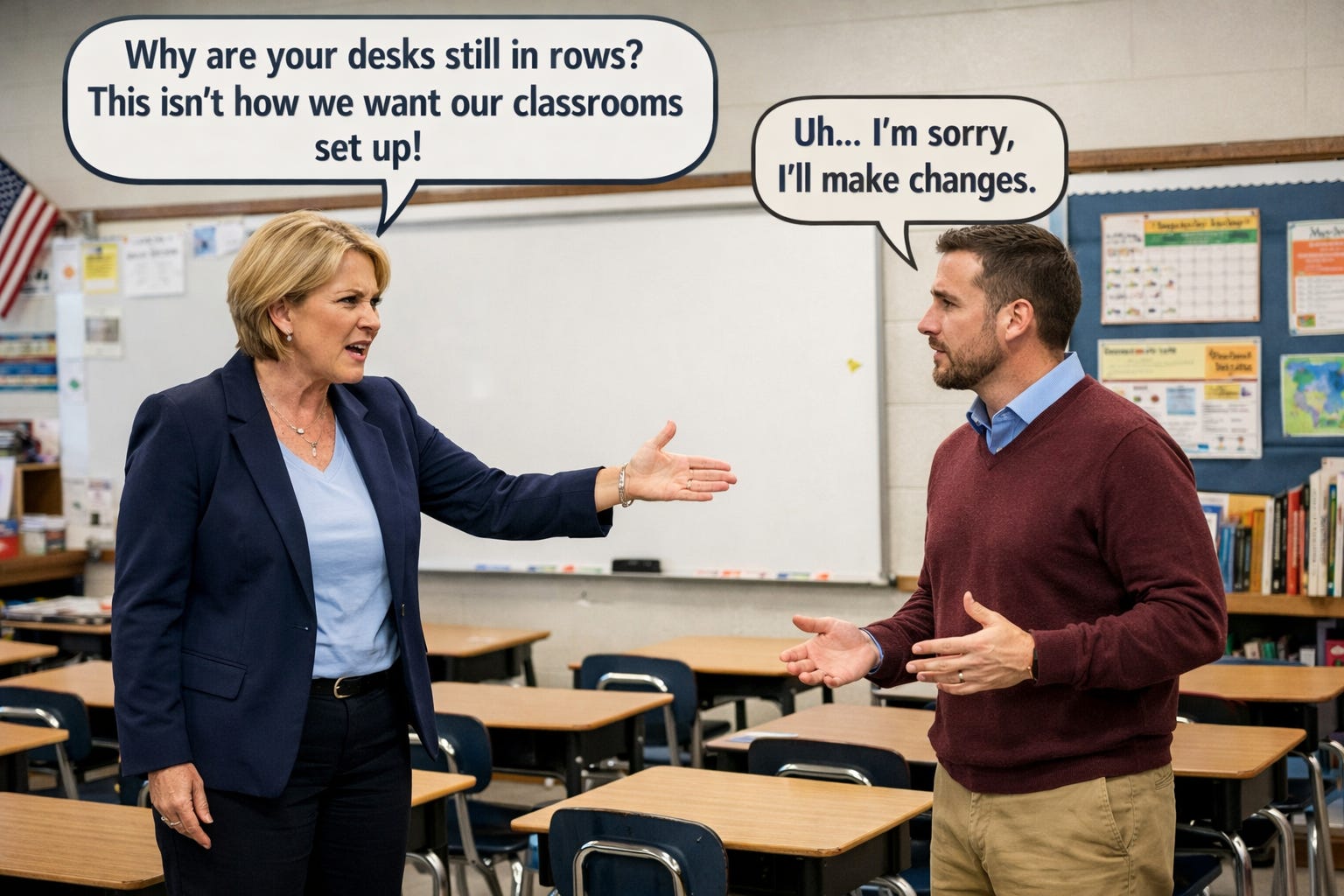
Much like my classroom layouts of those first few years, it was all a bit of a cluster…
Yet at some point in time rows became the red headed step child of the classroom. Anecdotally I’ve heard stories from teachers of leadership conducting classroom observations and reprimanding teachers who had their students in rows.
“It’s too old fashioned and authoritarian!”
“The students need to be in groups collaborating!”
“There should be no ‘front’ of the room!”
These are all real statements I’ve heard throughout my career and yet the way we layout our classroom can have an enormous impact on student attention and their cognitive load.
Why the layout matters
What students attend to, is what they’re most likely to learn. Some classroom layouts such as table groups, a big circle or the most heinous ‘the desks are wherever the students dragged them to at the start of the class because there are no rules and we live in chaos’ provide additional challenges to student attention.
Students may not have a clear line of sight to the instruction and therefore have to hold more transient information in their working memory leading to a higher chance of cognitive overload.
Students may also be sitting directly across from and therefore eye to eye with another student which is another distraction from the learning.
Students being sat in such a way which promotes larger group work can also lead to great amounts of social loafing where some students are able to coast on the work of the more engaged students within the group.
In the instance of the ‘student choice’ seating arrangement as alluded to above you can often end up with a mega row at the back of the room, attached to the wall to prevent teacher circulation and observation. Surely those students aren’t up to anything nefarious right?
All of these reasons mean that no matter how great the instruction, the learning is likely to be less effective than ideal.
The way the layout should play out
We all teach in different schools with different resourcing and different sized classrooms. This means there are some limits on exactly how we set our classrooms up. However, if we follow the evidence and aim towards best practice then rows hands down are the most effective classroom layout to maximize the chance of student learning.
A classroom set up as rows allows a clear line of sight for all students to the instruction taking place. It also gives the teacher far more mobility throughout the room to be able to check for student understanding with no blind spots. This provide meaningful circulation where the teacher is able to plan their route to meet students with the most need early and provide scaffolds to ensure their success.
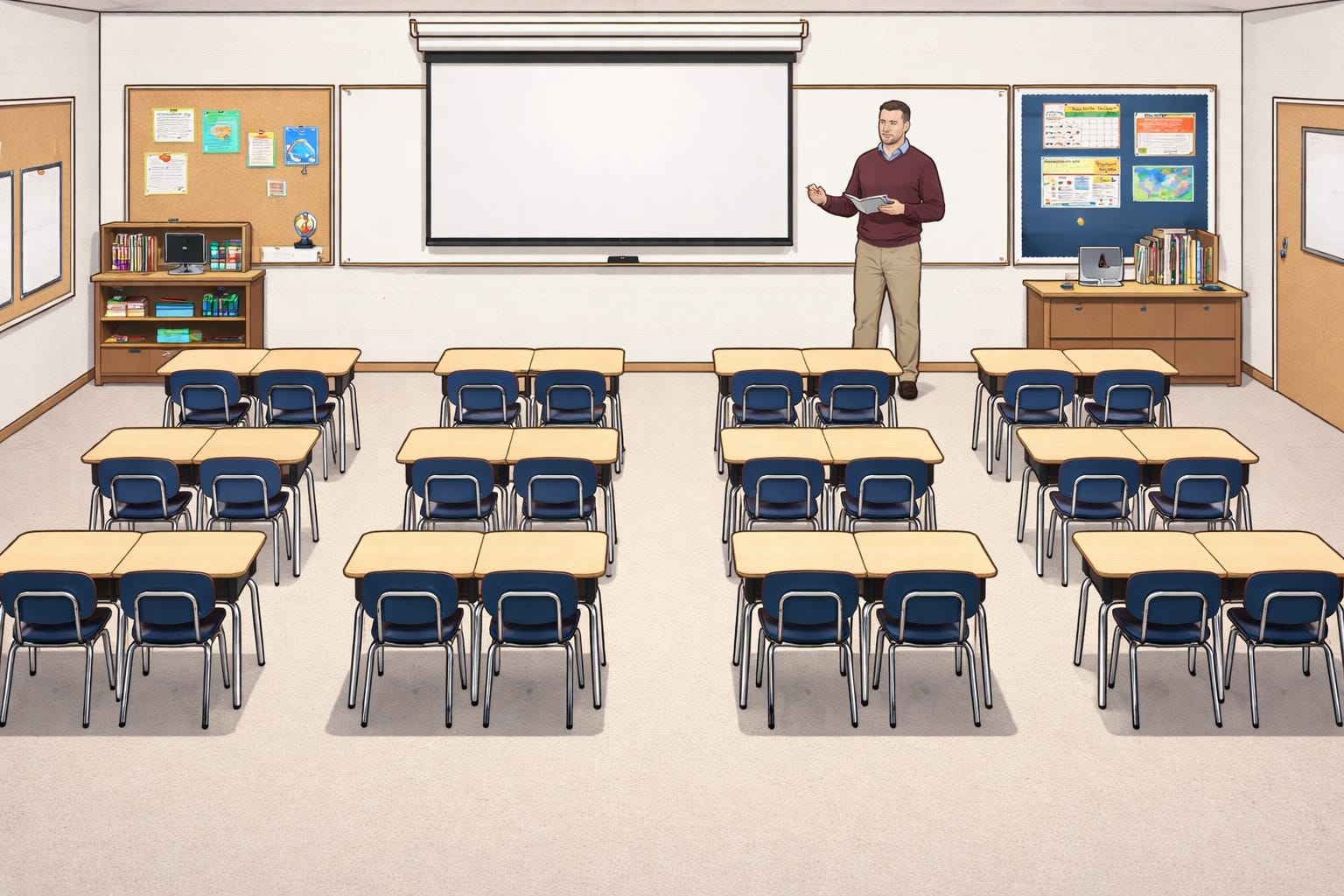
That’s not to say that students are to never work in groups, as this format allows for pairs of students to simply turn around and join the table behind them to facilitate group work1 within the class without having to rearrange the furniture.
“In another study, researchers found that having the seats in rows also benefitted students with Special Educational Needs (SEN). They found that compared to being in groups, when students’ desks were arranged in rows, their “on-task” behaviours increased from 35% to 70%. The students were also three times less disruptive.”2
There’s this strange overriding myth in education that student agency and choice will lead to stronger learning outcomes. The issue within this hypothesis however is that teenagers have underdeveloped pre-frontal cortexes and do not have the capability to make decisions which are in their best interest 100% of the time. By allowing students to set up the classroom however they desire we effectively lower the bar of how much learning we are accepting will happen within our class.
Setting the room up for success costs nothing. If you set up the routines correctly, students will even fix the room for you if they enter and it is outside of the norm. Students thrive in routine and consistency and rows provide that in spades.
I would still cap group work as Think Pair Share activities to prevent time being wasted.
I agree I observed a class yesterday and the students were in rows and it was a great display of how it can engage the students in the learning and focus on the teacher and not on each other.