That’s so primary school
Learning doesn’t discriminate so why do our strategies?

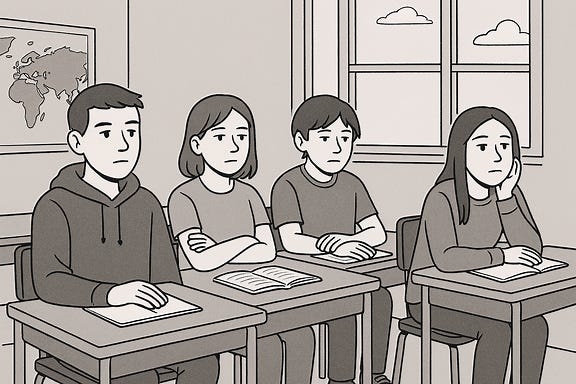
Currently, I teach in a senior secondary college. That means we are one of around a dozen schools in the state of Victoria who only have students attending for Years 10, 11 and 12. This presents its own benefits and challenges in a wide range of areas. One of the biggest is the staff perception that because students are in a senior school then they should be strong, mature, autonomous learners who take full accountability for their own learning. If you’ve met a 16 to 18-year-old you probably know very well that they are at peak passive disengagement and will do everything in their power to tell you what you want to hear so you never push for more.
Despite some learning being biologically primary (speaking, facial recognition etc), content taught in schools is biologically secondary. Therefore, it isn’t innate to them. It is artificially created. Knowledge which must be taught, not caught. This knowledge must be carefully broken down and sequenced in meaningful ways so students can build on their prior knowledge towards mastery.
Yet in many secondary classrooms you will see one of the following two exaggerated scenarios:
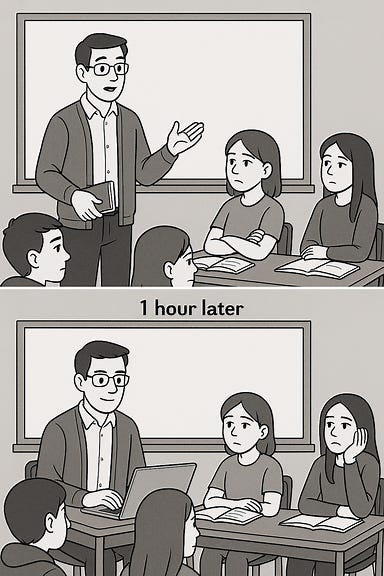
Scenario 1: Yap then tap.
The teacher lectures students for an obscene length of time, often tangential until they need to take a break to check their emails while the students work on a list of questions, they hopefully absorbed the answers to on their devices which they definitely will not be using AI to answer.
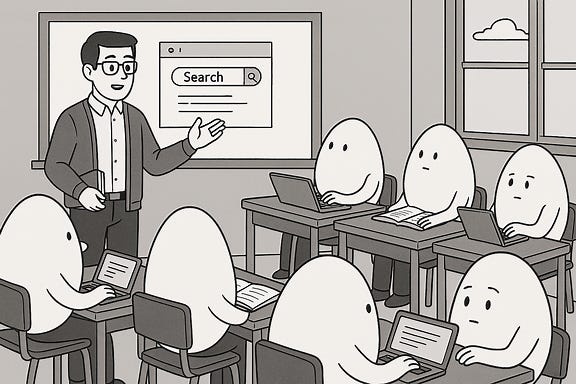
Scenario 2: Free range eggs
The teacher poses a question to the students and asks them to research online to formulate a response. Then they retreat to their laptop as their mature students go online and ask AI to formulate a response to it.
Often when confronted with a student who is disengaged or becoming a behavioural challenge in their classes these same teachers may claim “they just don’t want to learn”. It shouldn’t be about wanting to learn. Why would they want to learn? It is our job to teach them.
In the last few years, I’ve been either involved in or running various professional learning sessions about explicit teaching and responsive teaching practice. Within this is a focus on checking for understanding as well as consistent routines and opportunities to respond. One of the most common comments I hear in response to many of these strategies when they’re suggested as best practice is:
“But that’s so primary school”
Implying that strategies which are proven to drive engagement and learning are somehow limited by age.
So, I would like to explore my favourite and most effective strategies that are “so primary”:
1. Choral response
This is the number one strategy I constantly hear teachers say, “I couldn’t do that with my students”. Choral response refers to having either the whole class or small groups within the class to respond in unison to a question. Sometimes a single word, other times an important sentence. I LOVE choral response with my year 11s and 12s. It works on a few different levels. First and foremost, it is a check for listening which quickly identifies if students are still following your explicit teaching or whether you need to go back. Secondly, it can be a great way to re-energize the class if you feel the energy slipping in the room. Forcing teenagers to repeat key words over and over again until you’re happy with the level of enthusiasm not only works for rehearsal of key content, but it can also re-focus any fee students whose attention has been waning. I also never get sick of picking on any group who are not actively joining in and making them repeat it while the rest of the class listens to ensure no one is too cool to be a member of the chorus.
2. Mini whiteboards
If you don’t use mini whiteboards, you should.1 I can understand some of the challenges if your school does not currently have the infrastructure in place as the cost of a class set of boards and constantly replacing markers is significant. However, I am yet to find a better way to make student thinking visible with no way to opt out. When working with mini whiteboards it is incredibly important that you set routines which are rock solid. Without routines around how the students get their whiteboard when they come into class, how they show their work and where they put their whiteboard during instruction, you could be left with 25 students doodling not only wasting time but wasting your precious ink.
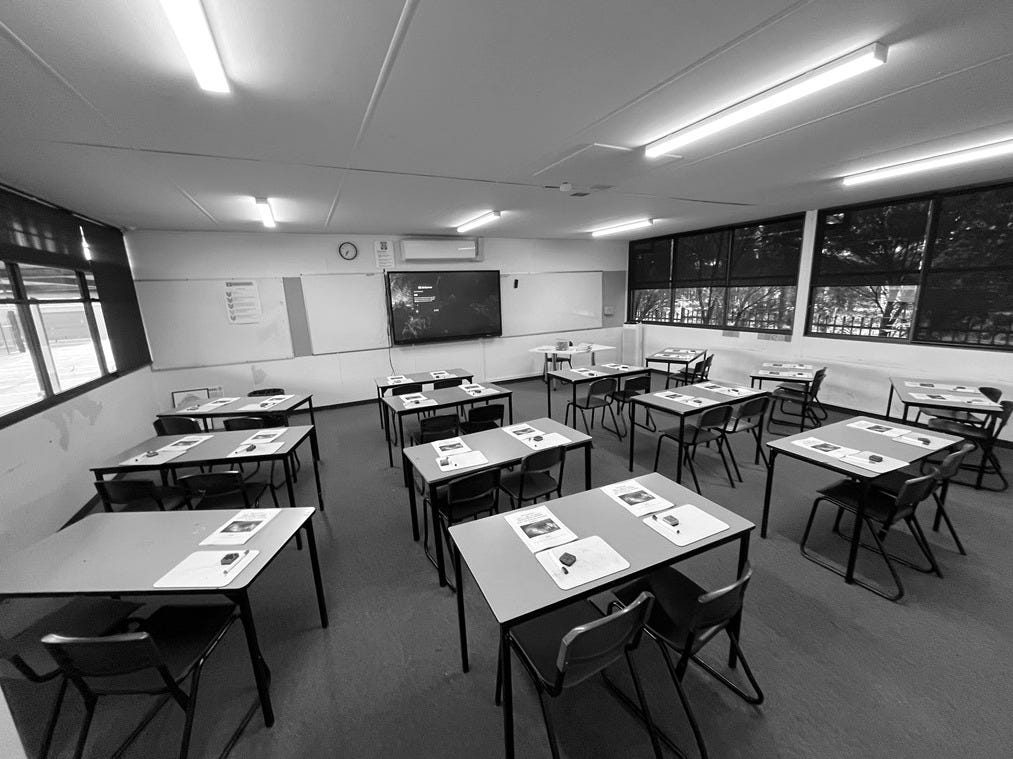
I teach most of my classes directly after a break, so I deliberately come into class early to set up the room exactly as I want it to look in a mode I like to refer to as “I dare you not to learn you little punks”. The students had then been taught the routine that as they enter class, they sit in their seat and begin work on the Do Now activity on the board. This means that no learning time is wasted. Then during instruction, they are to place their board and marker on their pencil case and have nothing in their hands. Then when we move on to a check for understanding they are expected not to hold up their answer until the end of a countdown and not erase their response until they are instructed to. Sometimes these routines need to be tweaked and re-taught but it has meant that within 3 weeks of the school year, there is minimal transition time between tasks and a constant loop of student feedback.
3. Think/pair/share
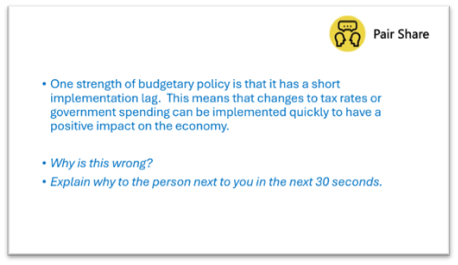
Often in a senior school we fall into the habit of stating “there just isn’t enough time, we need to plough through the content”. There’s always time. Slow is smooth and smooth is fast. A think/pair/share activity is where students are given time to think independently about a prompt which they have just been taught about, then given time to share their ideas with an elbow partner (the person next to them) and then either cold called to share or expected to agree on an answer to write on their whiteboard to share.
This is a great tool for equity in your classroom as students who aren’t fully understanding currently are able to fill in the gaps when they talk to a peer which actually means you need to provide less intervention later in or after class. It also gives students opportunities to draft a response in an important low stakes way where being incorrect will never be known by anyone other than their partner meaning that students may be more willing to take risks and truly apply themselves.
4. Attention signals
Attention is the most prerequisite for learning in our classes. Yet, in a senior high school we wrongly assume that students will choose to pay attention to the teacher rather than any extraneous stimuli in their environment. Having students’ full attention is the only way to guarantee that we can optimize students’ working memory so we can make learning stick. If the knowledge never makes it into the students’ working memory, then it doesn’t stand a chance making it into long term memory and therefore learning hasn’t happened.
I previously was so guilty of trying to teach over distracted students. Screens up, chatter occurring. I had no hope of the learning actually occurring.
So then how do we ensure we have full attention? Having pens down and screens off (and while you’re at it throw them out of the classroom completely) before doing any of the following:
· A countdown: eyes up in 3…2… 1…
· A call and response: this can be anything. “Everyone tell me, what colours the sky?”
· Rhythmic clapping: different clapping patterns also work well to ensure students have nothing in their hands.
· The ‘look’: if you’re lucky enough to have it, some teachers can gain full attention simply through holding their face in a way that demands focus.
5. Routines
Routines are not just for children; routines are not just for students with additional needs. Routines benefit everyone. I love routines. If something negatively impacts the imaginary schedule I’ve made in my head during a day off work, it causes me serous stress. Students thrive when routines are consistent. Cognitive load is lessened as students do not need to think about what they should be doing because it becomes automatic. Transition times become faster so learning times are maximized. A tricky thing with routines however is that they should be somewhat consistent between classes, as if a student has a different routine in 5 different classes it means that they’ll be code switching all day, leading to additional mental fatigue and difficulty focusing on learning.
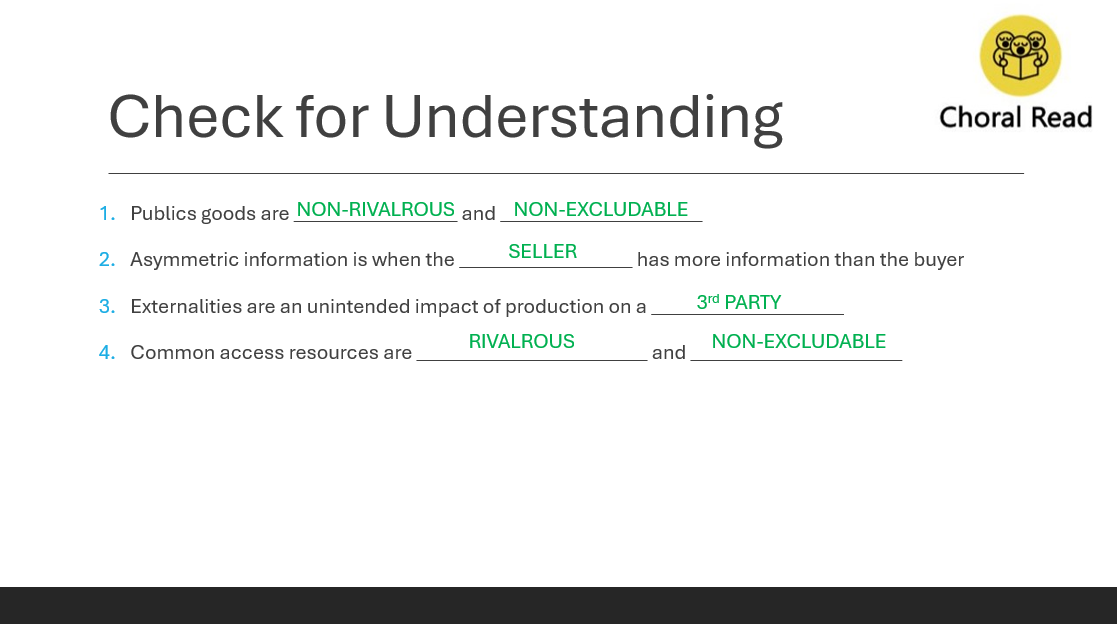
6. Sentence stems/Cloze activities
If you have taught students in higher year levels in the past decade, you would know that the disparity in literacy levels is far greater than ever before. In a year 10 class you can have students whose reading and writing ability is equivalent to between a year 1 and year 10 level and everywhere in between. This means that no matter how perfect your instruction is, some of these students do not have the writing capability currently to put that knowledge into words. The cognitive load of choosing where to start is insanely overwhelming. By providing sentence starters and gaps to fill student understanding of the knowledge is able to be quickly assessed without penalizing students for their ability to write. At the same time this models an exemplary answer for students further ahead in their learning and therefore allows them to consolidate their content knowledge and how to apply it.

This is far from an exhaustive list of strategies, but these are 6 strategies that I feel have made an enormous difference to student engagement and understanding in my senior classes. The students do not think that they are being treated like little kids. They appreciate that they are able to display their understanding in a variety of modes that feel easy but can have a strong benefit to learning.
From a teaching perspective these strategies take minimal planning or time investment and when implemented well save countless hours of marking and intervention outside of class.
It’s prime time we started implementing more of the incredible strategies our primary colleagues use day in and out because best practice doesn’t discriminate.2
Rebecca Birch just posted a great short piece about how in education we often implement strategies that sound good rather than based in evidence.
Have found the article for my next insights newsletter 💪 thanks for sharing