Strat Chat - Accessible Design
The details are the devil.

How many hours of your career can you honestly say you have spent scouring the internet for the perfect image or gif to add to a slide deck under the impression that this was going to drive student engagement?
The answer for me is definitely too many.
As educators we are prone to doing too much. We often do not weigh up the time required versus the benefit gained in the activities we complete in our planning time.
Even worse, sometimes the elements we pour hours of time into may actually have a negative impact on learning overall.
Hands up1 if you’ve seen or created the following before on a slide.
Multiple different fonts/wordart.
Gifs or images only tangentially relevant to the learning.
Too much information appearing all at once.
More than a few different colours (which aren’t high contrast)
Noises and transitions like a scene change out of a Star Wars film.
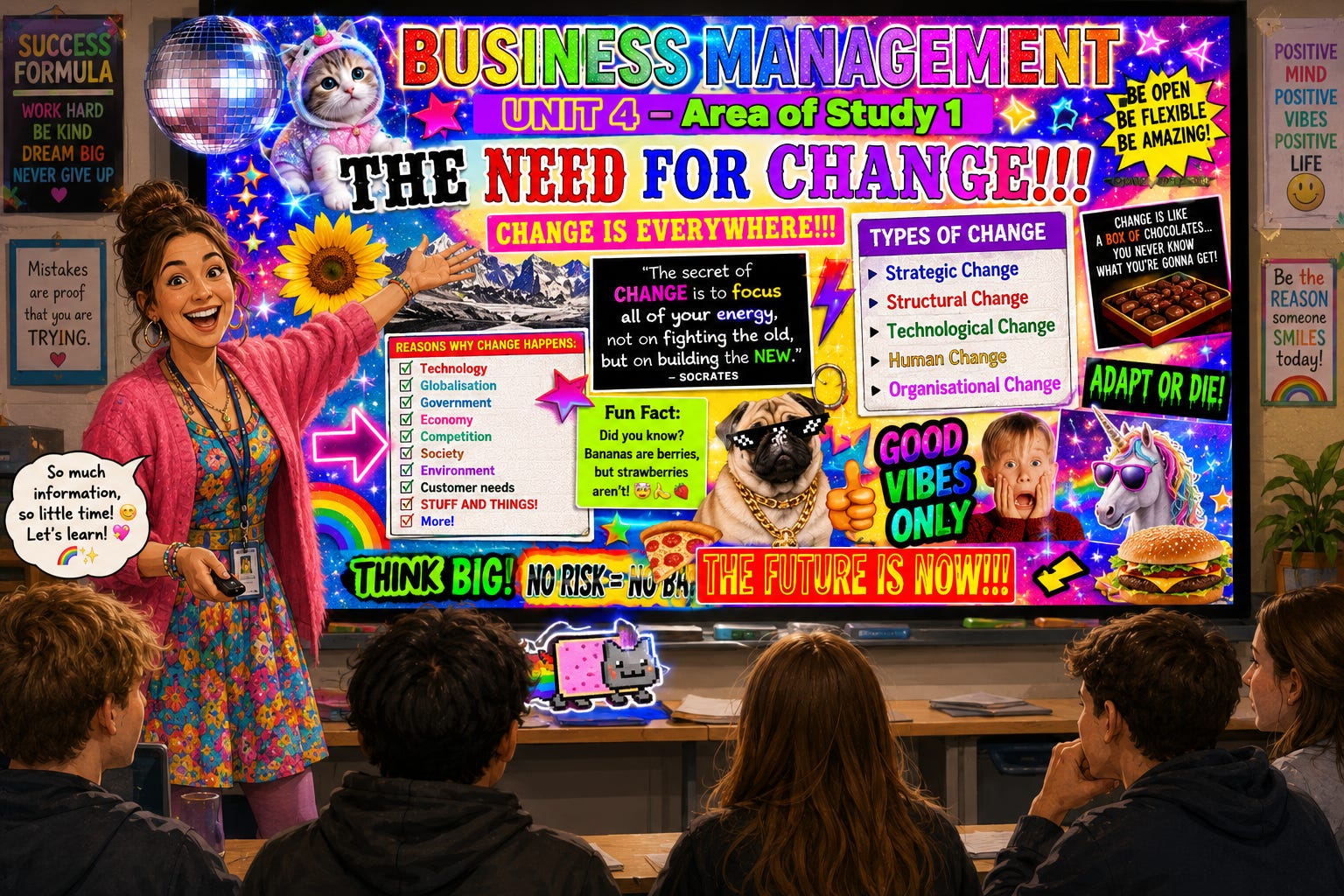
Your honour I will not lie before this court of Substack. I am guilty of all of the above. Maybe even all at once.
Before you arrest me and send me to Inclusion and Explicit Teaching jail you must know that I was doing all of these things because I truly thought they were going to have a positive impact on student learning. I was young and naieve.
I’m older and wiser now. I put my loosely relevant gif on a separate slide and transition through it quickly without fanfare, like an adult.
In education attention is the currency which we require in our instruction. What we attend to, is what we can think about and what we think about is what we are more likely to learn. As Daniel Willingham says “Memory is the residue of thought” and if our resources are too busy to attend to properly, then thinking is unlikely to occur.
In 2025 StepLab released a brilliant Inclusive Teaching discussion paper which outlined five principles of inclusive teaching:
Embrace Cognitive Similarity (our brains are more alike than they are different)
Prioritise High-impact Core Instruction (strong Tier 1 instruction is key)
Make Lessons Accessible By Default (accessible design)
Adapt Minimally and Appropriately (check for understanding then be responsive)
Empower Effective Teacher Assessment. (use formative assessment to decide what’s next)
For the purpose of today we are going to focus on Principle 3: Accessible Design.
Mccrea, Barker and Goodrich (2025) phrased the core idea like this:
This principle involves proactively making lessons, resources, and the physical learning environment as inherently usable and understandable as possible for the widest range of students from the outset. Mirroring universal design in architecture (like ramps benefiting wheelchair users, parents with prams, and delivery workers) or technology (like captions helping in noisy environments or for those with hearing impairments), the goal is to anticipate and remove potential barriers during the planning phase (EEF, 2021). In short, accessible lessons are perceivable, understandable, and doable by all students. Implication: This requires teachers to consider accessibility across different domains.
In it’s simplest form this involves analysing our classroom resources and layout then surgically removing any elements that distract or detract from the learning. That’s not to say there cannot be any images or titles etc,. These just aren’t the focus of the learning, therefore they can be given their own time to shine as their own slide rather than being a potential draw of student attention away from your instruction.
The paper refers to designing our lessons to be perceivable, understandable and doable.
Perceivable refers to our resources and classroom being optimised by using clear fonts (serif or sans-serif does not matter however steer clear of anything too decorative), high contrast design with minimal colours as well as removing any distracting noise such as irrelevant images, decorative elements etc.
Understandable refers to use of clear language which is broken down gradually. Animations being used to gradually reveal content as it is relevant allows students to only attend to what is important at the current time while having the previous information remaining on slide helps to prevent cognitive overload via the transient information effect2. The teacher will also provide models, think alouds and worked examples of the subject content and check student understanding frequently.
Doable refers to setting tasks which are manageable (eg. not too complex or too many elements present which could overwhelm) and provide students with enough processing time when asking questions (teachers on average wait less than one second for a student response when the ideal time is four seconds).
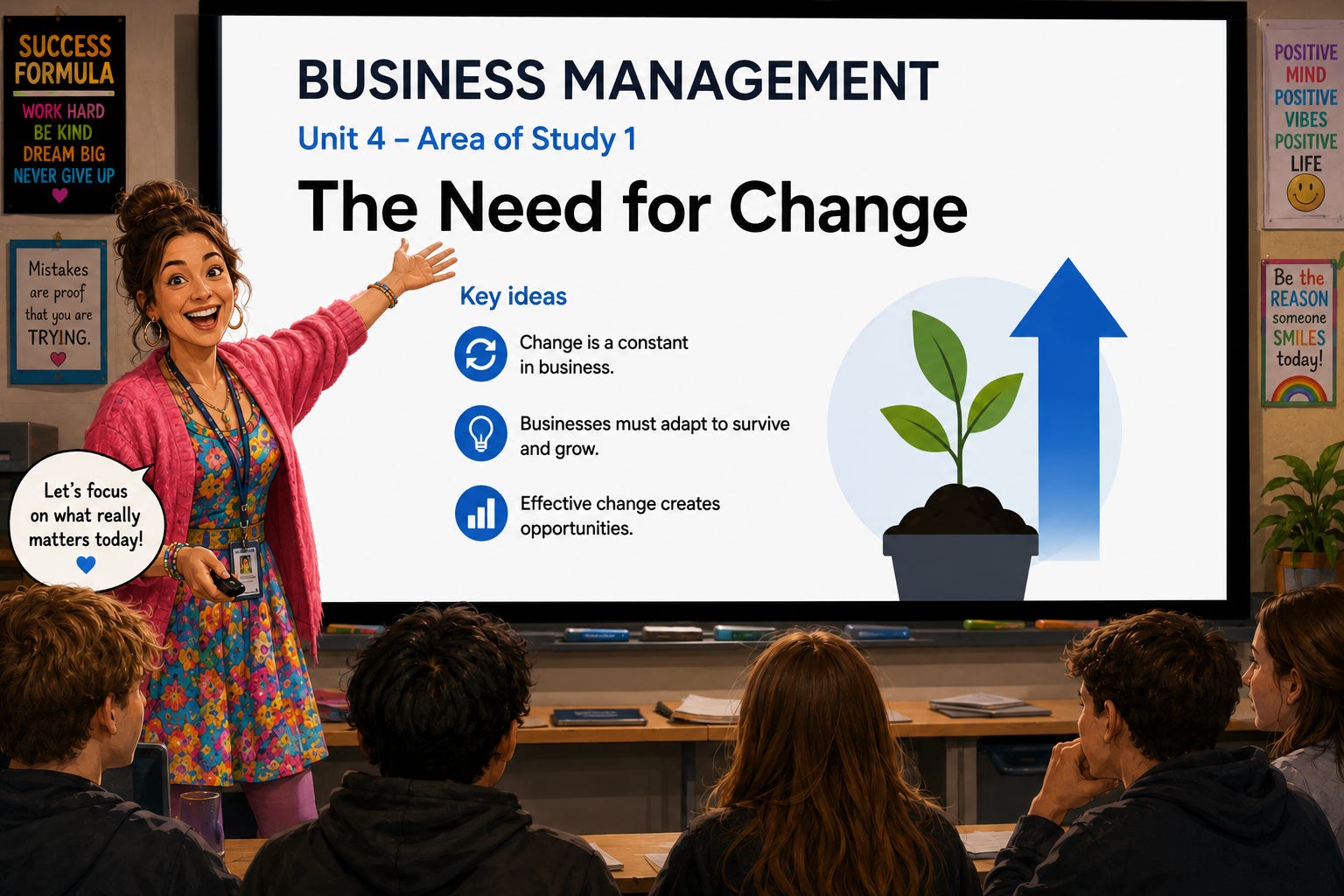
In practice what this looks like is stripping away unnecessary elements from the classroom and resources so that students can focus on what actually matters. Learning. By being inclusive and accessible in our resource and classroom design we are not only benefitting students with additional needs but actually benefitting all learners. Minimising distracting elements means that the likelihood of students attention being on the learning that matters is significantly higher and therefore off-task behaviour is likely to fall and assuming the tier 1 instruction is implemented effectively then understanding should be shown by a higher proportion of students.
Carl Hendrick recently shared in his Learning Dispatch new research around ‘seductive details’ and how this impact equity within the classroom.
The students most vulnerable to distraction were the ones least equipped to resist it. - Carl Hendrick
Designing accessibly is a no brainer, no student should be disadvantaged by our need to make our resources aesthetically pleasing. There is no teaching award for slickest slide deck, prettiest PowerPoint or cluttered classroom so why not save time in the creation and focus on what really matters.
Actually this is a no hands up classroom
Once the information disappears it must be held in working memory.
Currently, there are far too many colleagues that depend on the use of powerpoint. In my opinion, your own subject knowledge is key.